27 June, 2013

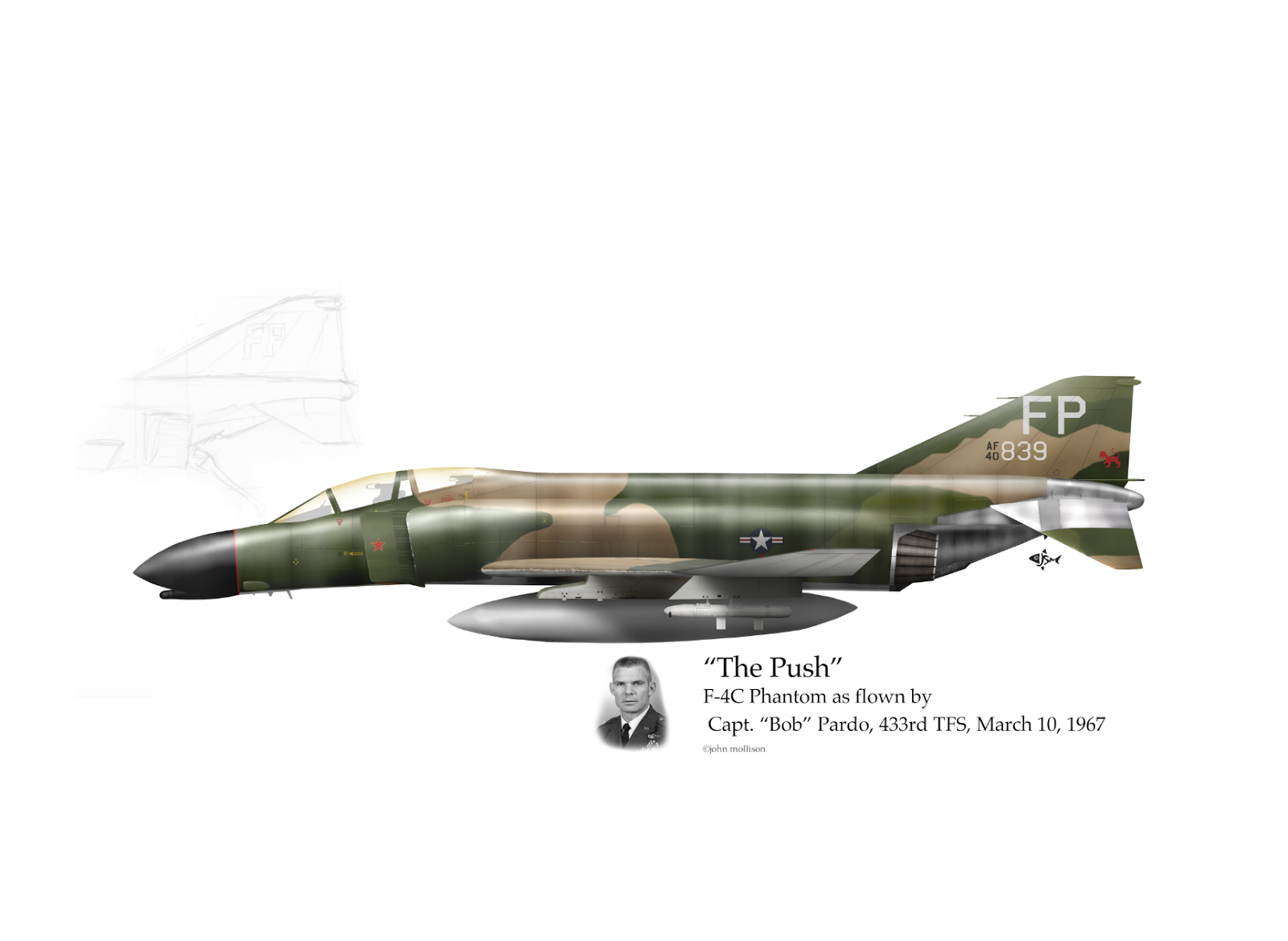
Profile 78 - FINAL: "Pardo's Push".

Do you remember when President George H. Bush talked about the "Thousand points of light"?  The actual quote was something like, "...America moving forward, always forward—for a better America, for an endless enduring dream and a thousand points of light."

In today's glitterati world, there are thousands of points of light going off every second—they're called "paparazzi."  No disrespect to President Bush or even the hard work of those who follow Miley Cyrus around but I haven't seen so many points of light as I've seen points of Bullsh*t.

Whatever.  My point of view isn't anything new.  But I will say this much—at some point or another a person comes to the crossroad that their actions either matter for the greater good or they don't.

But even then, what does something good look like?  Does it look like Miley Cyrus?

Hmmm.   Well, as far as I've learned, if you turn your eyes toward Texas, and squint really hard, you can see a point of light named Bob.  Pardo.  That's him on the left.


This isn't the place for the back story of the famed "Pardo Push."  Click here for that.  Instead, this is the place for you to learn a quirk of the story that might brighten your day.  Especially if you're in the dark of cynicism.

A couple nights ago, Bob and I were talking about his defining moment and I was trying to figure out why Bob did what he did.  Offhandedly I asked, "So, (Lt. Earl) Aman was your wingman..."

Bob interrupted, "No.  Earl was not my wingman."

"Somewhere I read that Earl was a wingman..."

"That's wrong.  I was #2.  Earl was #4.  My leader and Earl's leader had head back to base."

Hmmm.  Headed back to base, eh?

"What do you mean headed back to base?  You mean they left?"

In case you don't understand the significance of what Bob just said, look at the illustration below. The leaders are second and third from left.  These are the guys that are supposed to lead—both the mission and the example.


To be fair, I haven't talked to either of the leaders that flew in that four-ship on March 10, 1967. All I know is this—Bob Pardo and his backseater Steve Wayne, though flying a combat-damaged F-4 themselves, stuck around to help Earl Aman and his backseater Robert Houghton when the 'leaders' didn't.

Anyway, I wondered why Bob stayed with Earl.

"You and Earl must have been good friends, yes?"

Bob replied,  "No.  Well, sure, I guess.  Earl was in my squadron..."  In other words, Earl was just a guy in Bob's squadron.  Cordial, friendly, sure.  But best buds?  No.  Kind of like the guy from work who rounds out your golf foursome a few times a summer.

Anyway...

"So why did you do it?  Why did you risk everything (your life, your military future, possible imprisonment) to save Earl?"  My pen was ready...

"Well.  I guess...my dad. Yeah.  It was my dad.  He taught me...I guess, that..."

Ha.  Bob Pardo didn't have a pat answer.  At least nothing other than a tangental ramble of how his old man taught him this and that.  In listening to Bob's Depression-era family and having to work hard, there were enough aw-shucks moments that I wondered if Bob wasn't a little too good to be true.  See, I remember something about WW2 ace Pappy Boyington saying that behind every hero was a bum.

And that's fine.  I can accept that Bob Pardo is human.  In fact, I'm sure he's flickered a few times.  Maybe gone-out altogether, too.  I don't know.

But I do have another picture to show you.  Look below.

That's Bob on left, Earl at right.   The quality of the photo isn't great but I think you can see for yourself that Earl is in a wheelchair and on a ventilator.  Here's the backstory - in 1994, Earl was diagnosed with Lou Gehrig's disease and by the 28th anniversary of "The Push," was being fed through a tube.


And the T-shirt on Earl's lap is one of 3,000-some t-shirts that Bob and a network of friends bought and sold to raise money for Earl's chair, ventilator, computer...

"Did you know Earl was in one of the first classes of The Air Force Academy?"  Bob asked conversationally.  Of course I didn't.  And there's no way I could have - Earl died from the disease in 1998.  But Bob sounded pretty alive when he proclaimed, "We got him a van so he could go to his reunion (in 1996)."

Did you catch what happened here?  The friendship?  The continued sense of duty?  The strength of the brotherhood?  The, dare I state it, "leadership"?

Bob's no point of light.

Bob's a torch.

And I tell you what—I think this was the kind of stuff President Bush was talking about.

Ok. Back to the guy who commissioned me to do this piece, he's an ex-POW who thought Pardo's "push" was a momentous act of humanity and worthy of space on his office wall.  "You're going to like Bob.  He's the real deal."

He is.  And now I know what a point of light looks like, too.

Meet Dick Francis.  Read about him here.  His story isn't so much about being a "point of light" as it is igniting new ones.

I start his F-4E next and hopefully, when we're done, Dick will have lit three more.

Photo


PS - Bob has asked that I work with him to benefit his charity, the "Air Warrior Courage Foundation."  There are a very limited number of prints of my artwork, signed by Bob, available and a sizeable portion of each sale goes to the AWCF.   SOLD OUT.


05 June, 2013

Profile 78 - "Pardo's Push"


You know, they're all interesting.  And they're all thought-provoking.

And they're all important.

"They" are The Stories I get to hear.   And the more I hear, the more I become convinced that Combat and Peace are more alike than not.  Both have their moments of bone-chilling fear, horror, courage and victory... as well as monotony and, ironically, peace.

For me it works like this—I'll be in the thick of something, from business to yard work and suddenly, I'll remember a story and my perspective will change; somehow, inspiration will come and a fresh outcome will occur.

Maybe that's why studying History is so important—it's the story of "us." Minute by minute, we climb a little higher atop the shoulders of giants of the past.*

But, there are those stories that somehow separate themselves from the grit, grime and guts and take on a glow that's almost, well... holy.

Last week, I received a commission to do one of the most fantastic moments in combat aviation.   The moment is regarded in aviation circles as "Pardo's Push."  In short, an F-4C pilot named Bob Pardo literally pushed his stricken wingman's dead Phantom fighter out of enemy air space in order to give the the crew* a better chance of surviving a bail out and avoiding the hell of a POW camp.

You can google "Pardo's Push" yourself.  If you know anything about aviation, aeronautics, physics or that quality called cojones, you'll shake your head in disbelief.  But it's all true and right now, I've got the chance to dig a little deeper and learn more about the man himself.   This is going to be so cool!

Oh.  And the guy who commissioned me?  There's a story in that, too.  He stated,  "(Bob's) selfless act of love and compassion for (his) wingman and complete disregard for personal safety, is among the greatest acts of valor ever exhibited. Quite simply (Bob is), and will always be, my hero."

In short, he wants a picture of Pardo's F-4 on his wall for inspiration.   He too get's the "standing on the shoulders of giants" quote. 

This story would normally just end with two like-minded guys toasting a minor business deal.  I'd get to work while he cleared space on the wall of his den and you'd see the final work. For better or worse.

But like Pardo's Push, the story isn't a normal deal.  Instead, the Commissioner is someone who ended up with the very fate that Pardo risked so much to avert.

Yeah, my Patron was a POW himself.

Stick around. 

This one is important.  For more reasons than you might be thinking...


*Interesting!

*F-4's had two people aboard - pilot and weapons officer.

05 May, 2013

Profile 77 - FINAL: "647" as flown by Major Forrest Fenn, 309th TFS, 31st TFW


Oh yeah...

Just look at it—do you think the aeronautical engineer's art could get much wickeder?!  When I think of my left hand on the throttle, pushing forward—I hear Hades' fire roaring like a blow torch until I've left the sound far behind...I like this airplane.

Sadly though, there's just not many around anymore.  Of the 2,294 built, only 80-some survive.  Fortunately for me, there's one nearby and I make a pilgrimage to it every once in a while.  But, it's not a fulfilling event as the thing is just a carcass of its fighting form; engineless, gunless and bolted to concrete pads.

I'm lucky to have at least one to look at though. It is, after all, a tool of war and ultimately expendable. Yeah, yeah, the idealist in us wants to believe that war is won by preserving life but in fact, it's won by invoking death. Or, as Patton is quoted as saying, "The point is not to die for your country but to make the other son-of-a-bitch die for his."

It's a quote to raise a cheer, that's for sure.  But the irony is, the 'other son-of-a-bitch' is cheering the same line!

Anyway, have a look at "647" above.  It's a dead son-of-a-bitch.

In fact, 647 is one of 198 F-100s lost to combat in Vietnam.  If you noticed the date, it's there because on December 20, 1968, 647 was buried in a violent ceremony in the country of Laos.  In other words, she was shot down.

Ok, hold that thought.

The more I "do this," the more I see War and Peace as more alike than not.  Yet, the main difference is that War is hyper-compressed timewise and amplified in volume while peace ambles on in between.  In other words, ten years of peace equals something like a month of war.  Both periods contain their horrors, injustices, moments of glory, hope...it's just that said moments are diluted in peace, but concentrated in war.

You may not agree with my musing but it helps me get my head around whatever can be learned by these crucial, game-changing moments in Life.  When I meet people who've survived War, I think, "Hmmm.  What can I learn?"

Ok, back to 647.

When I was going through Rich Hall's Vietnam photo book (see Profile 75), one of the photos that brought the most animated and positive response was of three grimy guys in front of an H-53 "Jolly Green Giant" helicopter.

Rich pointed to the guy in the middle, John Carlson and remarked, "Great, great man!"  Rich recalled a handful of anecdotes about Carlson that confirmed in his mind that John was a true leader of men.  Then, Rich tapped the guy on the right and said, "And that's Major Fenn.  Lucky, lucky man!"

The short of it is this—the photo was taken just after the "Jolly" dropped Forrest onto friendly soil.  See, Forrest was flying 647 when he was hit and forced to eject over northern Laos, smack dab in unfriendly territory.  Rich, John and two others were part of the team of Skyraiders that buzzed around Fenn, allowing the "Jolly" rescue helicopter to swoop in and snatch Fenn from certain torture and likely death.

Ok, hold that thought.  One more time.

In War and Peace, the one thing that everyone can relate to is the concept of "Luck."  To some people it's a capricious thing that "just happens."  To others, it's conjured by an alchemy of actions and thoughts... and to the rest, "Luck" is a tool to be harnessed and used.

Have another look at 647.  That's Forrest Fenn's old bird.  It died.  But Forrest did not.  He was rescued by people and systems that planned, prepared and thought-through the likelihood of just that horrible moment.   And Forrest didn't just get rescued, he... thrived.

Look, I'll save you the "google."  If you've watched the Today Show or any other news headline, Forrest is the guy that hid a MULTI. MILLION. DOLLAR.  FORTUNE. in New Mexico.  Really.  Click here if you don't believe me.

And he wants someone to find it.

In other words, Forrest went on to redeem the death he was spared by making a success of himself as— of all things—an art dealer.   And he wants to share it with someone who is...

Lucky?

Hmmm.

That Forrest was rescued was really out of his control - guys like Skyraider pilots Rich Hall, John Carlson, Jim Jamerson, the Jolly crew and the "PJ" (the the guy who pulled Forrest into the hovering helicopter) did the critical work.

But what of the moments in between being shot and rescued?  What happens to a person between the impact of horror and deliverance?  Is it Luck?  Is it Fate?  Is it...?

Forrest explained, "I went over my bail-out procedures every night before going to sleep.  I initially went into shock, but I knew how to correct it.  30 minutes later, I was 100%."

Funny thing.  Rich Hall said something interesting about Forrest's rescue.

"Forrest was ready for the Jolly."

Alright.  This story doesn't seem to be over.  There are elements at work that aren't formed yet, but don't be surprised if I write/draw more about the Rescue of Forrest Fenn.

In the meantime, I hope this story conjures up a spark of hope for you.  And whatever War you're in, there are people who are able to rescue, provided you're prepared and ready.

Though the thing that brought you to the moment is dead.

Photo courtesy Rich Hall.

PS - if you're interested in owning a print of Forrest's F-100, signed by the man himself, click here.


14 April, 2013

Profile 75 - FINAL: "Sweet Marlene" as flown by Rich Hall, 602nd FS

ORIGINALLY POSTED 14 APRIL, 2013.

Rich Hall ‘flew west’ 19 April, 2024

*******

And here she is— Sweet Marlene, circa 1968.

One of the peculiarities of doing Vietnam-era aircraft is the ordnance.  It's one thing to do the airplane itself.  But the stuff under the wings?  That's another project in and of itself.

See, a WW2 airplane might carry one or two of a handful of options.  But by the time the mid '60s rolled around, a veritable junk-drawer of lethality was available to fill the Skyraider's 15 hard-points.

So, when it came time to load-up Sweet Marlene, I didn't have a clue where to start.  Rich didn't either. I asked him what the typical loadout was and he replied with a question, "Typical?"

However, Skyraider Association historian Byron Hukee (also a former Skyraider pilot) laid out my answer when I asked him about the dark colored, cylindrical missile-pod under the wing of the only photograph that showed Rich's A-1E in whole.

Byron described the object as the LAU-3 Rocket Launcher.  It contained nineteen 2.75" rockets with warheads of high explosive, anti-tank, white phosphorus or flechettes.  The launcher unit was reusable and could be filled with any number of varieties.  Have a look at the closeup below (photo: Mike Maloney).


Anyway, Byron asked me how I wanted to do the rest of the loadout on Miss Marlene and I replied that I was thinking about doing it just like a picture I had of Sweet Marlene in-flight.  Byron had the same picture on screen while we were conferring over the phone.

"Oh."  Byron stated thoughtfully.  He was staring at the image on his computer screen. "You want to do it coming home then."

Ok.  Hold that thought.

Guys name stuff they like.  Or respect.  Or fear.  I have a buddy who names his cars, another who names his tools, another who has names for his wife (depending upon her mood)...at first glance, someone might think it's a way for us to "possess" something.  But I don't think that's quite true.  If all of my experiences are correct, the act of naming is actually to show that some how, that object possess us.

It's hard to explain, but if you've ever talked sweetly to your car in the hope of getting some measure of extra performance, you know what I mean.

Anyway, one of the great questions to ask a guy who had a named aircraft is, "What's the story behind the name?"  In this particular case, I asked Rich, "So. Was Sweet Marlene someone you knew?"

"Yes." He replied matter-of-factly and waited for the next question.

"Is she...still... around ??"  I asked leadingly, hoping to coax the full story.

"Yes."  Same perfunctory reply.   There was something to this "Marlene" thing but it wasn't going to come out easily.  My story-alert sense was starting to flash more quickly.

"And...so...whatever happened to her?"

Ok, I realize that poking questions into as-yet dark holes can be, well, surprising.   And, I know when to quit.  At least I'm working on that.  But I figure that if a guy is man enough to fly combat in the first place, agree to an interview and top the stack of combat photos with a big 8x10 of SWEET MARLENE, he could handle the questioning.

He waited a couple of seconds before leaning forward to command, "She's home." Then after a beat or two, he grinned and laughed.  I got the low down on all the kids and grand kids, too.  Whew.  Happy story.  No tragic heartbreak, no pain, no suffering.  Sweet Marlene remained.

But. My story-alert was still flashing.

"So.  Can I talk to her?"

Pause.

"Maybe."  And I could tell we were back to one-word replies.   But after some thought, Rich added, "That'll be up to her." It was clear that this line of questioning would end for the day.

Well, another day came and I was able to connect with Marlene via email.  These are her words:

"It was one of the worst years of my life...lots of worries about his safety.  Plus he missed a whole year of our little son's life.  Our 9 mo. old son and I stayed with my family during this year (1968) and they were extremely supportive. We were not part of any (established) squadron or anything as Rich left right out of pilot training.  We exchanged tapes every day.  And letters...I looked forward to the mail every day and if we didn't hear anything that day, I automatically worried more.  I believe we had only 2 phone calls during this time....

...and it goes without saying that this was tough on (Rich) especially when he didn't get any of the 'thanks' that he and the others were so deserving of."

And that's all she wrote.

Just this past week, I finally finished David Halberstam's book, "The Best and the Brightest."  It chronicles the people and decisions that lead to American involvement in Vietnam.  It's a brilliant peek into the minds and egos behind this culture-shifting moment in our history.  But the thing that struck me most was just how common, how ordinary, how logical and how human it all was.   Change the names, change the terrain, remove the dead and "Vietnam" now looks like a handful of situations I've experienced from clients to cub scouts.

So many intentions, good and bad, and in the end, people just wanted to quit and go home.

And so, my artwork is shown, as Byron pointed out, "coming home."

And here's the photo.  Miss Marlene, returning to base after a mission, empty, save for the single store.  And look closely at the LAU-3.  There are a few rockets left.


There's a weird poetry here.  The Skyraider, so capable, a pilot who, despite a frustration with the circumstances, fulfills his duty 200 times in a war that had long swallowed and digested its purpose...

...and named for a miserable beauty thousands of miles away.

I really want to learn everything I can about Vietnam.

Sweet Marlene deserves that.  And so do her boys.


There's more to come. 

17 March, 2013

Profile 75 - UPDATE: "Sweet Marlene" as flown by Rich Hall, 602nd FS


8,000lbs of power.   That's the burden this beast could carry.

It struck me while listening to Rich describe his service, that this man, a farmer, a dad, a husband, average guy, had the destructive power of a WW2 B-17 bomber under his thumb.   And I had no idea what that meant other than, "a lot."

Most of us, in fact more than 99.99% of us, can't comprehend what that kind of power really means.

But!  I'd say most of us CAN comprehend a football field.

So, to give you an idea of what this airplane could do, I've created a little graphic below.  It's a typical football field that happens to find itself on the wrong-side of four Skyraiders*; each one carrying eight 500lb general purpose bombs with a lethal blast radius of about 60 feet.


Now you've got an idea of what kind of power Rich and any other Skyraider pilot could wield.  And judging from my conversations with Rich, it was indeed, a burden.

Ok - hold that thought for a second.

A few weeks ago, I had the idea to get more people involved in my interviews by having little "contests" to get a free pilot-signed print.  Judging by responses, the idea was a good one.  In this case, the winner of the "Ask a Skyraider pilot" contest won with the question, "What types of missions were your most interesting?"

So, to Mark K**, here's your answer:  "Sandy."

In Vietnam, Skyraider mission callsigns were called "Firefly" or "Sandy" depending upon the type.  Firefly missions were close-air support; bombing, strafing, blowing stuff up.  Sandy missions were protecting downed pilots; keeping the enemy at bay until a rescue helicopter could come in and take the pilot home. Rich flew 200 missions in Vietnam.  Of those 200, 193 were Firefly missions.  In case you're not good with math, that means only seven were Sandy missions.

Why Sandy?  He explained, "Sandy" was by far and away the most interesting and rewarding mission I flew.  EVER.   When we got a guy out, it was as if every little idiotic rule ever set to print was only a bump in the road. The Rescuee's smile made it all worth while."

"So tell me.  What were they like?"

"Well, I'll tell you one."  Rich cleared his throat, leaned forward in the chair and brushed invisible dust from the table between us.  "Tom was Sandy 1, I can't remember Sandy 2 but I was Sandy 3.  Loren was Sandy 4 but he got hit and had to head for home."

"He got hit?"

(Sandy 4, flown by Loren Alfred)

"Yeah. (And that left the rest of us).  The downed pilot was somewhere away from a cliff area and there was a (Viet Cong) gunner down there.  (Tom) was doing his best (to find the gunner) but I knew where he was.  At the base of the cliff, there was this hole and he must have had a .50 cal in there.  So...you know what a Flechette Round is?"

"Yeah."

"So I rolled in on him.  You have to get really close (with a Flechette).  And he had me bracketed!  Everything is coming up at me (from this hole) lazily.  In glowing balls.  Those are tracers, so in between those balls are bullets too.  And I'm boring in..."

I could see it in my minds eye.  The A-1, her monstrous bulk and all that power hanging from her wings; an oil-belching green pterodactyl winging in on an angry mouse...

"Everything (he had) was coming up at me and you know something?"

"Yeah?"

"All those tracers coming up at me were inside my gunsight reticle!***  I fired, my flechette blew about 30 feet in front of him.  Obliterated that hole.   His last tracer round passed my 2 o'clock and to this day, I think it went through my propeller arc.  I have vivid, vivid memories of that day..."

Indeed, if you talk to Rich, by virtue of the stories he wants to share,  you'd think that Sandy missions were all he flew.  But they were just 5% of his total.  

"So tell me about one of the 193.  What were they like?"

Gawd, what a look I got and I will never forget it!  It wasn't mad.  It wasn't angry.  It wasn't sorrowful.  The quality that made Rich's expression so indelible was it's utter blank-ness.  The instant Rich processed my question, it was as if a switch suddenly flipped to a mental channel of white noise.  

[insert static sound: kkkshhhhhhhhhhhhhhhh]

It had to be three seconds before he snapped too.   And then, he answered deliberately, "Unproductive."  He paused, got his mojo back and chagrinned, "I blew up evil trees."

Another pause and Rich went back to sharing anecdotes about the guys in his photo album, "And that's so-n-so.  He was a great guy!  Let me tell you about that picture.  It was a Tuesday..."

I'll be finishing Rich's Skyraider by the end of the month and if all goes to plan, the last post will be a surprise.  Probably as much for me as it is anyone else (if that makes sense)...

_______________________________________

*Yeah.  I know.  That's only a quarter of the A-1's payload.  It makes the airplane's power all the more awesome, don't you think?

**And yes, you won a print of my artwork, and it will be shipped right after our print signing which will be in a few weeks or so.

***The gunsight reticle is a circle that's displayed on the glass panel of a gunsight.  It's about 4" in diameter.  So, when you imagine Rich in his cockpit, crouched behind his gun sight, imagine seeing the return fire come up within that small space.  This moment truly was a mortal game of Chicken.

08 March, 2013

Profile 76: FINAL - "XR K" as flown by Steve Pisanos, 4th FG


Finished—the Spitfire Steve Pisanos flew after the Eagle Squadron transferred into the USAAF's 4th Fighter Group.  It's hard to believe that was over seventy years ago.

Read again.  Seventy years ago.

Of course, the world was different back then.  But when you talk to someone who was there, the decades between shuffle back and forth at lightning speed and suddenly, the distance in time seems insignificant.

Steve Pisanos is 93.  But you'd never know it.  At least, Steve will challenge preconceptions one might have of what a 93 year old is supposed to be like.

By any stretch, the man's life is amazing.  No, make that AMAZING.  Immigrant, fighter pilot, ace, fighter with the French resistance, test pilot... Steve Pisanos wrings 'life' out of time like I wring water out of a dishtowel!

Suffice it to state, when you ask Steve the question, "How did you accomplish so much?" you need to listen to the answer.   But his answer, at first, disappointed me.

"Determination," he said in his Greek-tinged accent.  "Determination, my friend."

Of course, I'd heard THAT before.  It was so pat, so hackneyed, it was white noise.  You can buy the word "determination" in any one of a hundred self-help books at Barnes and Noble.

"So what does that mean?  Tell me how it came about," I asked.

"I'll tell you how I came to America.  By freighter.  And I was on that ship working.  Shoveling coal into wheelbarrows (for the coal-fired engines).  And I knew nothing of English but I wanted to be a pilot.  And in Greece?  I was not going to be a pilot.  So I came to America."

Sensing there was more to the story, I asked him to flesh it out a bit more.

"Ok.  I found out we were going to Baltimore.  Baltimore?!  Where is that!?  I knew New York City, I knew Chicago was full of gangsters and everything west was Cowboys!  That's it!  So I wondered how I was going to get to New York City from Baltimore.  And you know what?"

"What?"

"I learned the English to say, "Ticket. To. New York."

"Okay..."

"See, I knew I had to take a train from Baltimore to New York.  So I learned the words:  Ticket. To. New York.  I must have practiced it a thousand times while shoveling coal.  Ticket. To. New York."

"That's all you knew?  Of English?"

"Yeah.  Basically.  That's it."

And I realized that he gave me a dynamic definition of what determination is.  If you want something, you need to be willing to shovel coal, land in the wrong town and learn a new language to take a train to where you wanted to go in the first place...in order to achieve it.

Determination, indeed.

Click here.


Though there's more to share here, it'll have to wait.  I don't want to keep Sweet Marlene waiting any longer. 

01 March, 2013

Profile 76: BEGINNING/UPDATE: "XR K" as flown by Steve Pisanos, 334th FS

HA!

Sometimes a blind squirrel gets a nut!

And that blind squirrel is ME.  Being frank, I thought my last WW2 bird was done.  Two weeks ago, someone asked me what "new WW2 airplanes I was working on?" and the answer came out like a cough of sorry dust, "None."

But.  Never taunt Fate.  Circumstances can turn in the damnedest ways...

Behold, Steve Pisanos' Spitfire Mk.Vb.  The one he flew with the famed "Eagle Squadron*" in WW2.  In case you don't know who the Eagle Squadrons were, they were a group of American pilots who enlisted in the RAF to fly against the Germans BEFORE the United States declared war.

In case you don't know who Steve Pisanos is, well, suffice it to state, he was a Greek who fought for the British against the Germans and later became an American.

Confused?  Don't be.  I'll explain it all later.  But for those of us who want a REAL American success story, bookmark this one.

Stay tuned...and this one will move REALLY fast!  My apologies to "Sweet Marlene" below but something tells me, Marlene can play Patience tuned like a finely tuned instrument...


*A sharp-eyed reader informed me there were three Eagle Squadrons flying with the Brits in the early days of WW2 and he is correct (of course, too as he's a PhD in history).  Thank you, Jerry!

25 February, 2013

Profile 75: BEGINNING: "Sweet Marlene" as flown by Rich Hall 602nd FS


It's begun!  The A-1E Skyraider flown by Rich Hall of the 602nd Fighter Squadron, circa 1969, Nakhon Phanom, Thailand.  Her name is Sweet Marlene.

Who's Marlene?  Ha. You're going to have to wait for that one.  But I will tell you about her pilot.  And her mission.

The sketch above is what I took with me today when I met Rich—every airplane I do starts out as a pencil sketch.  Armed with scant details that I'd gleaned from serial-number data, the Skyraider Association and some second-rate sleuthing, I was able to get my head around where we'd start. But, I was depending on Rich to fill in the details.

And he was eager to talk.

Sifting through his flight records and a tattered, crumbly photo album, Rich shared his Vietnam story one person at a time; his easy baritone voice seasoned with the sweet style of a small-town grandfather. "That'd be so-and-so..." he laughed while twisting the black and white photos to face me.  "And this is Col. XYZ and he..."  Or, "That's Major 123.  There's a funny story about him.  He once..."

They were great stories.  Happy, go-lucky stories that resembled summer camp or maybe the first year of college.  But after the first five, I got a little concerned that I'd ever get to Rich's own tales.  I can handle amusing anecdotes about someone else's antics as much as the next guy but after a while, I need to get to the point.

"So. Let's talk about what you did."

The chatter stopped. Rich looked at me with a quizzical expression and it occurred to me that this guy might have had no idea what I was here for.  In short, I had some explaining to do.

"I want to know what you did, why you were there and draw your airplane.  I don't have an axe to grind and I'm not looking to poke anyone.  But I do know that a lot of people are like me.  They just want to know what went on over there."

"Alll-right."  He leaned back in the chair and rested against the black leather armrest.  "There was a gag order on this for twenty five years.  $10,000 fine or 10 years in prison.  I left in 1974 so that's up."

"Ok.  That means you were up in Laos and Cambodia then."

"Yes."

I opened my journal, clicked the ball point pen and we got down to business.

8,000lbs of it.

[to be continued]


20 February, 2013

Profile 70: FINAL - B-52G of the 77th BS


Finished!  

There's a teeny bit to be done with the engines, but I'll handle that with a pencil on the final prints.

I'm pretty happy with how it turned out.  Her pilot, Dave Berkland, is really happy and that's all that matters.

There are times when I write or draw something and it's not my best.  Instead, it's the best I can do given the circumstances.  My own skill-level, availability of knowledge, lack of time...and sometimes a lousy subject (they happen) can really conspire to foul up what should have been a Magnum Opus.

Kind of like the Vietnam War.  It should have been another shining moment in American history but because of... you get the point.

In the course of this project, the fruit of the research was really a bumper crop.  I learned a lot about the Khmer Rouge, corresponded with a Cambodian woman who had lost family during Pol Pot's sh*t-headed tenure, read three gut-wrenching biographies on Cambodian KR survivors and even managed to talk one of my kids into watching The Killing Fields.  In short, this B-52G was an immersive experience!

And it was also a spiritual one, too.

In the biblical book of Genesis, Cain, after killing his brother, answered God's probing question about the whereabouts of Abel by snarking, "I don't know.  Am I my brother's keeper?"

I'll leave it at this.  In the brotherhood of Man, the United States is still the biggest, strongest Brother out there.  And this B-52G, in spite of being older than I am, remains a BIG stick in the American quiver of, for lack of a better word, "help" for others in need.  What is "help" and "harm" remain to be seen though - that's where we need to put the burden on our leaders, I guess.

I wish we, as a Nation, could go back in time and do certain things better or at least, differently.  But God help those that think that this country doesn't deserve our absolutely best effort, now.

Postscript - Lt. Berkland took the photo below, in his words, "Somewhere over the Pacific.  I was just doing my job, John.  Just doing my job."


POSTSCRIPT:  The opinions that this post has stirred up are more proof (to me) that Americans, especially my generation, can only benefit from further study on the Vietnam War and the South East Asia experience.   If there is any wrong to the times, we need to know it clearly and openly so we can avoid similar situations in the future.  If there is any right to the times, we need to know it for our nation's self respect and the honor of those who served.